Before You Begin: Stay Safe
Before diving into tools and tires, safety comes first. If you’re on the road, pull over to a safe spot, preferably a flat area away from traffic. Avoid hills or soft ground. Turn on your hazard lights to make your vehicle visible to others. Always engage the parking brake to prevent the car from rolling. Place wheel wedges or blocks behind the wheels opposite to the flat to keep the car in place. If you have a reflective vest or road flares, use them—especially in low-visibility conditions.
What You’ll Need
Your car should come with the basics, usually found in the trunk or under the floor panel. You will need:
-
Spare tire (ensure it is inflated)
-
Car jack
-
Lug wrench (tire iron)
-
Owner’s manual
-
Wheel wedges
-
Gloves If your car has special locking lug nuts, make sure you have the key adapter.
1. Loosen the Lug Nuts
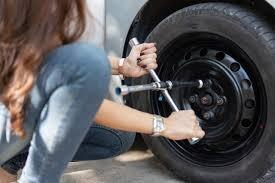
Use the lug wrench to slightly loosen each nut on the flat tire by turning them counterclockwise. This may require force—use your foot carefully if needed. Do not remove the nuts completely yet; crack them loose while the tire is still on the ground to maintain leverage.
2. Position the Jack and Raise the Vehicle
Check your owner’s manual for the correct jacking point near the flat tire—usually on the car's frame. Place the jack securely under this point and slowly raise the car until the flat tire is cleared off the ground. Never crawl under the car while it is supported only by a jack.
3. Remove the Lug Nuts and Take Off the Flat Tire
Now that the car is lifted, fully unscrew the loosened lug nuts and set them aside in a secure place. Gently pull the flat tire straight toward you and off the wheel bolts. If it is stuck due to rust, gently tap the sides of the tire to loosen it.
4. Mount the Spare Tire
Lift the spare tire and align the holes with the bolts. Push it onto the hub until it is snug. Hand-tighten the lug nuts as much as you can in a crisscross pattern to ensure even pressure. Do not fully tighten them until the car is back on the ground.
5. Lower the Vehicle and Tighten the Lug Nuts
Carefully lower the jack until the spare tire touches the ground and supports the car’s weight, then remove the jack completely. Use the wrench to tighten the lug nuts firmly in a crisscross pattern. This helps prevent wobbling. Ensure they are as tight as possible without standing on the wrench.
6. Check Everything and Clean Up
Before driving away, double-check that all lug nuts are secure. Stow your tools and the flat tire; note that many flat tires may not fit in the same small compartment as the spare. Remove any safety cones or wedges. If your spare is a temporary tire, remember that it is not designed for high speeds or long distances. Drive directly to a tire shop to repair or replace the flat.
Bonus Recommendations
Check your spare regularly, as an uninflated spare is not useful in an emergency. Practice the process at home to build familiarity. Additionally, keeping a tire repair kit or inflator in your car can be helpful for managing slow leaks or reaching safety.
Final Thoughts: Independence and Confidence
Changing a flat tire might seem intimidating at first, but once you know the steps, it becomes straightforward. It is a skill that provides independence and peace of mind. Being prepared and practicing the process proves that you are resourceful and ready for the road ahead.