The Evolution of Perceptual Computing
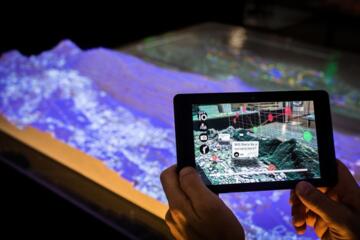
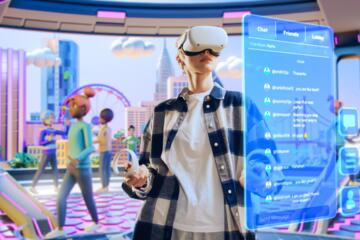
The shift from screen-based interaction to spatial immersion marks the most significant UI/UX transition since the smartphone. Perceptual computing—often categorized as Augmented Reality (AR)—projects digital information onto the user's view of the real world. Unlike Virtual Reality (VR), which isolates the user, AR maintains a connection to the physical environment, making it more viable for long-term daily utility.
In practice, this looks like a technician using Microsoft HoloLens 2 to see wiring diagrams overlaid on a physical engine block, or a shopper using the IKEA Kreativ app to visualize how a SÖDERHAMN sofa fits in their specific living room dimensions. These aren't just novelties; they are cognitive shortcuts that reduce "mental rotation" and spatial reasoning errors.
Market data underscores this shift. By 2025, the global AR market is projected to surpass $198 billion. Furthermore, conversion rates for e-commerce brands utilizing AR visualization, such as Warby Parker for virtual try-ons, have seen uplifts of up to 94% compared to traditional 2D browsing.
Critical Implementation Friction Points
Many organizations and individual adopters fail because they treat AR as a marketing gimmick rather than a utility. The "Wow Factor" wears off quickly, leaving behind expensive hardware and unused software.
One primary mistake is ignoring "environmental lighting latency." If digital objects flicker or don't cast shadows that match the room, the brain rejects the image, leading to eye strain and headaches. This is a common issue with low-budget AR apps that don't utilize Google’s ARCore or Apple’s ARKit 6 depth-sensing capabilities.
Another pain point is "interaction fatigue." Designing interfaces that require constant arm-raising (the "Gorilla Arm" effect) makes the technology unsustainable for work. Users often struggle with poor SLAM (Simultaneous Localization and Mapping) tracking, where digital objects "drift" away from their physical anchors, destroying the utility of the overlay in precision tasks like surgery or mechanical repair.
Strategies for Seamless Spatial Integration
Prioritize Contextual Awareness over Visual Complexity
The most effective AR doesn't need to be flashy; it needs to be spatially accurate. For developers and businesses, this means utilizing LiDAR (Light Detection and Ranging) sensors found in modern high-end mobile devices and headsets.
-
What to do: Implement plane detection and occlusion. Digital objects should stay "behind" physical tables or walls.
-
Why it works: Human depth perception relies on occlusion. If a digital cat passes behind a real chair and remains visible, the immersion breaks.
-
The Result: A 30% increase in user retention for apps that provide "stable" digital persistence.
Optimize for Hands-Free Utility
In industrial and medical settings, the value of AR lies in keeping hands on the task. Using RealWear or Vuzix smart glasses allows workers to access checklists or remote expert assistance via Microsoft Dynamics 365 Remote Assist.
-
Tools: Use voice-command interfaces instead of gesture-only controls to prevent fatigue.
-
The Result: Boeing reported a 25% reduction in wire harness assembly time and near-zero error rates when switching from paper manuals to AR-guided instructions.
Enhancing Consumer Confidence through Trial
Retailers must solve the "uncertainty gap." Using Shopify AR, small businesses can provide 3D models that users can "place" in their homes.
-
Practice: Ensure models are "True-to-Scale." A 5% error in scale can lead to a return, costing the business shipping and restocking fees.
-
Statistics: Brands using high-fidelity AR models see a 40% reduction in product returns, as customers have a realistic expectation of size and fit.
Real-World Impact Cases
Logistics Optimization at DHL
DHL implemented "Vision Picking" using Google Glass Enterprise Edition 2. Workers were provided with AR overlays that highlighted the exact location of items on warehouse shelves and showed the most efficient path through the facility.
-
Problem: High error rates and slow onboarding for new warehouse staff.
-
Result: A 15% increase in productivity and a significant reduction in training time, as the AR interface provided real-time feedback and navigation.
Medical Training at Case Western Reserve University
Using the HoloLens, medical students studied anatomy via the HoloAnatomy app. Instead of relying solely on cadavers, which are scarce and offer static views, students interacted with 3D, pulsating circulatory systems.
-
Problem: Limited access to physical specimens and difficulty visualizing complex 3D internal structures.
-
Result: Students learned the material 2x faster than those using traditional methods, and test scores improved by 50% regarding spatial relationship questions.
Comparative Framework for AR Hardware
| Device Category | Primary Use Case | Key Tools/Services | Performance Metric |
| Mobile AR | Retail & Social Media | ARKit, ARCore, Snapchat Lens Studio | High Accessibility, Low Immersion |
| Smart Glasses | Logistics & Remote Help | RealWear, Vuzix, TeamViewer Frontline | High Durability, 2D Data Overlay |
| MR Headsets | Engineering & Surgery | HoloLens 2, Apple Vision Pro, Magic Leap 2 | High Spatial Accuracy, High Cost |
| WebAR | Quick Marketing | 8th Wall, Niantic Lightship | No App Download, Lower Fidelity |
Common Integration Pitfalls
Overloading the User Interface
One of the most frequent errors is "data vomit." Providing too much information at once creates cognitive overload. In a driving context, for example, a HUD (Heads-Up Display) should only show speed and immediate turn directions—not social media notifications. To avoid this, use "progressive disclosure"—only showing information when the user looks at a specific object or performs a specific action.
Ignoring Privacy and Data Security
AR devices are constantly mapping environments and, in some cases, tracking eye movements. Failing to implement "Privacy by Design" can lead to legal hurdles, especially under GDPR or CCPA. Always anonymize spatial mapping data so that a user’s home layout isn't stored on a cloud server in an identifiable way.
Neglecting Battery and Heat Management
High-fidelity AR is computationally expensive. Many developers build apps that drain a smartphone battery in 20 minutes or cause headsets to thermal-throttle. Optimization through "level of detail" (LOD) switching—reducing the complexity of digital objects that are far away—is essential for sustained use.
FAQ
How does AR differ from Mixed Reality (MR)?
While the terms are often used interchangeably, AR typically refers to a simple overlay of data (like a Pokémon Go character). MR, or Mixed Reality, involves digital objects that interact with and are occluded by the physical environment, such as a virtual ball bouncing off a real floor.
Is AR safe for long-term daily use?
Current high-end headsets use "vergence-accommodation" solutions to minimize eye strain. However, experts recommend the 20-20-20 rule: every 20 minutes, look at something 20 feet away for 20 seconds to reset your focal point.
What is the minimum internet speed for cloud-based AR?
For seamless "Cloud AR" (where the heavy rendering happens on a server), you generally need a 5G connection or Wi-Fi 6 with a latency of less than 20ms to avoid "motion-to-photon" lag.
Can AR work without specialized glasses?
Absolutely. Mobile AR via smartphones is currently the most widespread form. Using WebAR frameworks like 8th Wall, users can experience AR through a standard mobile browser without downloading a dedicated app.
How do I start building an AR experience for my business?
Begin by identifying a specific "friction point" in your customer journey. Use a platform like Adobe Aero for non-coding prototypes, or hire developers proficient in Unity or Unreal Engine for high-performance enterprise applications.
Author’s Insight
In my experience consulting for manufacturing firms, the biggest hurdle isn't the technology—it's the ergonomics. I've seen million-dollar AR deployments fail because the headsets were too heavy for an eight-hour shift. My advice: always start with a "Hardware Pilot" where users wear the device for two hours without the software even running. If they find it uncomfortable, no amount of brilliant software will save the project. Focus on the human element first, then the pixels.
Conclusion
The integration of spatial computing into daily life is moving from "experimental" to "essential." By focusing on spatial accuracy, user ergonomics, and contextual utility, businesses can move beyond the gimmick phase to deliver genuine value. Whether it is reducing errors in a warehouse or allowing a customer to "test drive" a product in their own home, AR serves as a powerful bridge between data and reality. To succeed, start small: identify one high-friction task, apply a stable AR solution using proven frameworks like ARKit or ARCore, and scale based on user comfort and measurable ROI.